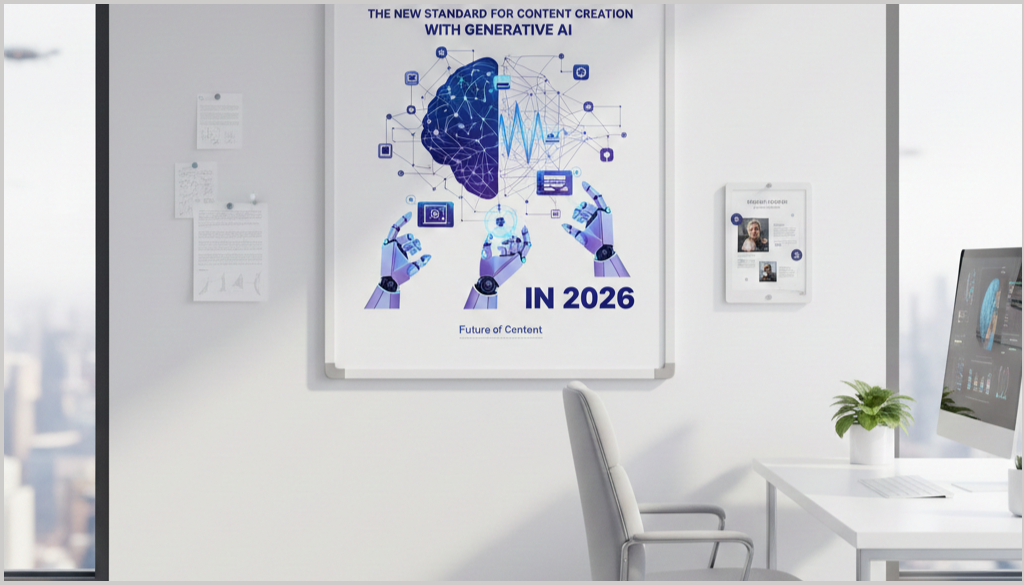
Hyper Personalization The New Standard for Content Creation with Generative AI in 2026
Visit > PORTFOLIO of Digital Marketing Strategist
In the digital landscape of 2026, the “one-size-fits-all” approach hasn’t just faded—it has become obsolete. As we navigate an era where consumers are bombarded with thousands of messages daily, the only way to cut through the noise is through Hyper Personalization. This isn’t just about adding a name to a subject line; it’s about utilizing real-time data and Generative AI to create content that feels like a private conversation.
Whether you are a brand manager or a solo creator, understanding the mechanics of Hyper Personalization is the key to unlocking unprecedented loyalty. At its core, this strategy leverages artificial intelligence to analyze behavior, context, and even user mood to deliver the right message at the exact right moment.
What is Hyper Personalization in 2026?
Traditional personalization was reactive. Hyper Personalization is proactive. While the former relied on static segments (e.g., “Males, aged 25-35”), the latter relies on individual, real-time data streams. By integrating Generative AI into your workflow, you can scale this intimacy to millions of users simultaneously.
Today’s leading platforms don’t just wait for a click; they predict it. By analyzing a visitor’s current journey, AI can instantly generate dynamic landing pages that change their layout, copy, and imagery based on the specific intent of the user. This level of Hyper Personalization ensures that no two users ever see the same version of a website if their needs differ.
The Role of Generative AI in Tailoring Content
Generative AI acts as the “engine” for Hyper Personalization. Without it, creating unique content for every individual would be a manual impossibility. LLMs (Large Language Models) now process vast datasets to understand not just what a user is looking at, but why they are looking at it.
Custom Emails: Beyond the First Name
Email marketing has undergone a total transformation. Gone are the days of mass-blasting a single template. With Generative AI, brands now deploy custom emails that are written in real-time. These custom emails might reference a user’s recent abandoned cart, their local weather, and their past style preferences—all woven into a narrative that feels authentic and human.
Adapting to User Mood
One of the most significant breakthroughs in 2026 is the ability of AI to detect user mood. By analyzing typing speed, scroll patterns, and interaction frequency, Generative AI can adjust the “vibe” of the content. Is the user in a rush? The AI serves concise, bulleted text. Is the user browsing leisurely on a Sunday morning? The AI generates a long-form, storytelling experience tailored to that specific user mood.
Strategic Pillars of Hyper-Personalized Experiences
To successfully implement Hyper Personalization, you need to focus on three main technical pillars. These ensure your Content Creation with Generative AI remains relevant and high-converting.
- Pillar : Data Integration
- Focus Area : Behavioural & Contextual data
- Impact on User Experience : Provides the “context” for AI generation.
- Pillar : Real-time Generation
- Focus Area : Dynamic landing pages
- Impact on User Experience : Increases conversion by matching intent instantly.
- Pillar : Emotional Intelligence
- Focus Area : Detecting user mood
- Impact on User Experience : Adjusts tone and style for deeper resonance.
By mastering these pillars, businesses can ensure that every touchpoint—from custom emails to social media ads—feels bespoke.
Transforming the User Journey
The journey from “Stranger” to “Brand Advocate” is now paved with Hyper Personalization. Let’s look at how this looks in practice:
- The Entry Point: A user arrives via a search query. Instead of a static page, they encounter dynamic landing pages that highlight the exact solution they were searching for, using language that matches their professional level.
- The Nurture Phase: If they don’t convert immediately, the system sends custom emails that don’t just “remind” them of the product but offer a new perspective based on their browsing behaviour.
- The Conversion: The final offer is tweaked based on user mood. If the AI senses hesitation, it might offer a personalized video testimonial or a limited-time discount generated on the fly.
This seamless integration of Hyper Personalization ensures that the brand remains a constant, helpful companion rather than an intrusive advertiser. For more examples of how I integrate these strategies into real-world projects, feel free to explore my Portfolio Website, where I showcase AI-driven content experiments.
Overcoming Challenges: Privacy and Ethics
While Hyper Personalization offers immense rewards, it comes with responsibilities. Users in 2026 are highly aware of their data. The key to successful Content Creation with Generative AI is transparency. You must provide value in exchange for data. When a user sees that their user mood is being respected—for instance, by receiving less frequent notifications when they are busy—they are more likely to trust the brand.
Furthermore, custom emails must never feel “creepy.” There is a fine line between “we know what you need” and “we are watching your every move.” The goal of Hyper Personalization should always be to reduce friction and enhance the user’s life.
Conclusion: The Era of Individualized Content
Hyper Personalization is no longer a luxury; it is a competitive necessity. By leveraging dynamic landing pages, crafting truly custom emails, and respecting the user mood, you can build a content ecosystem that thrives on relevance.
Generative AI provides the tools, but your strategy provides the soul. As you refine your approach to Hyper Personalization, remember that the goal is to make every user feel like your only user. This is the ultimate promise of Content Creation with Generative AI.

Anfasa Rahiman
Anfasa Rahiman
Digital Marketing Strategist | Content Creation with generative AI
Anfasa is an MBA-backed Digital Marketing Strategist in Kannur blending data-driven strategy with cinematic storytelling. She specializes in high-impact videography and design to elevate brands through creative digital excellence.